Forklift attachments can change how your machine handles longer loads, irregular materials and specialised lifting tasks. However, an attachment must also be compatible with the forklift and its lifting capacity to ensure safe operation. Understanding how fork extensions, clamps, rotators and other attachments affect load handling will help you identify suitable equipment from Fork Force.
Standard forks handle palletised loads easily, but longer materials, bulky shapes and specialised tasks may require a different attachment to support the load. The right forklift attachment allows your machine to handle loads that standard forks cannot safely lift.
Fork Force offers an overview of common forklift attachments and uses so you can better understand which option you might need, when to use attachments like cages or clamps, and what to consider to keep your operation safe and efficient.
Common Forklift Attachments and Uses
From basic extensions through to specialised tools for rotation, clamping and elevated work, each attachment is designed for a specific task. Here’s a helpful breakdown of forklift attachments in Australia.
Forklift Fork Extensions, Slippers & Carriage Upgrades
You’ll typically use these attachments when standard forks fall short for certain loads. They help you improve reach, balance and handling without changing the forklift itself, depending on whether you choose forklift fork extensions versus slippers.
- Fork Extensions: Metal sleeves that extend existing forks, allowing operators to safely handle longer or larger loads.
- Forklift Slippers: Protective sleeves that reduce wear on forks while improving load reach and handling flexibility.
- Wider Carriage: Expands fork spacing to support broader or more unstable loads, improving balance during transport.
Check Load Support Before Extending Your Forks
Fork extensions increase fork length, but can decrease the forklift’s rated lifting capacity. A longer load can move its centre of gravity further forward, reducing the weight the machine can safely handle.
Before fitting extensions, check their rated capacity, compatibility with the existing forks and the manufacturer’s requirements for load support. The load must remain stable throughout lifting and travel.
A wider carriage can create a different problem: fork spacing. It may provide suitable support for a broad load, but the forklift must still have sufficient capacity for that load’s weight and centre of gravity.
Load Measurement & Stability Tools
In busy warehouses or on worksites where you’re constantly lifting pallets, a small misjudgment in weight or balance can quickly create unsafe loads or delays. These attachments help you ensure you move goods more confidently and safely.
- Weight Gauge: Integrated systems that estimate load weight in real time, helping prevent overloading and improving operational safety.
- Load Guard: A rear-mounted safety frame that helps stabilise loads and protect operators from shifting materials during movement.
Rotators, Clamps & Spreaders
Rotators, clamps and spreaders address different handling requirements, from securing pallet-less goods to repositioning loads and adjusting fork spacing:
- Rotator: Allows full or partial rotation of loads, making it ideal for tipping, emptying or repositioning materials.
- Forklift Clamps: These lightweight attachments apply controlled pressure to secure irregular or pallet-less loads.
- Fork Spreader: This versatile bar adjusts fork spacing hydraulically to accommodate different load widths without manual adjustment.
- Bale Clamp: Featuring a solid design, bale clamps are designed for handling compressed materials such as paper, textiles or recyclables.
- Twin Pallet Handler: Enables your operators to lift two pallets simultaneously, improving efficiency in high-volume operations.
Match the Attachment to the Load’s Behaviour
Different forklift attachment types control loads in different ways. A forklift clamp must apply enough pressure to retain its load without crushing the material, while a forklift rotator supports how the load behaves as its orientation changes.
For example, a container carrying loose material may shift as it rotates. The attachment, container and forklift must be suitable for the intended movement, including the load’s weight and changing position.
If you are considering a side shift attachment, establish how much lateral adjustment the task requires. Side shifting helps position a load without repeatedly repositioning the entire forklift, but it does not replace adequate aisle clearance or correct fork placement.
Work Cages, Platforms & Crane Attachments
These attachments are designed for specific tasks, including occasional work at height, suspended-load handling and container loading. Each requires the appropriate equipment and operating procedures.
- Forklift Safety Cage: Provides a purpose-designed safety work platform for occasional maintenance or inspections at height, where its use is appropriate and the forklift and platform meet the applicable safety requirements.
- Crane Jib: Turns your forklift into a lifting tool for suspended loads, helping you extend reach and improve flexibility.
- Container Ramp: Helps you load and unload containers safely by bridging height differences.
Account for Suspended Loads
A forklift jib is a specialised attachment that supports loads that require suspended lifting. Its weight and the distance between the lifting point and forklift affect available capacity, while a suspended load can swing during movement.
Check the jib’s rated capacity at the intended lifting position and confirm that the forklift is approved for the attachment. Establish a suitable lifting procedure before use, including how the load will be secured and controlled.
Sweeper Attachments
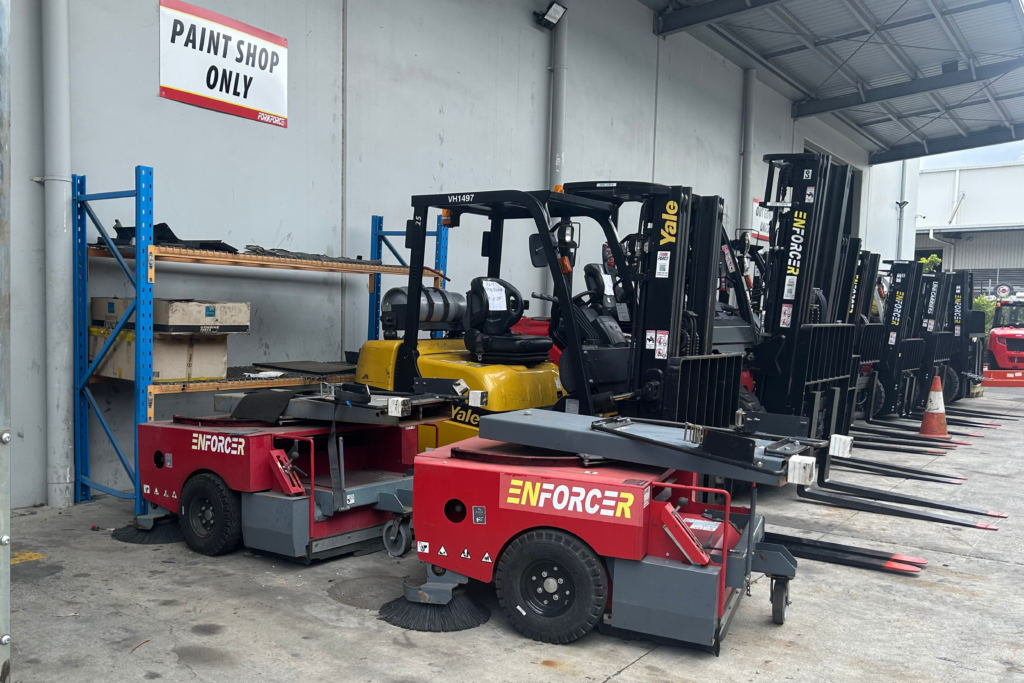
A forklift sweeper attachment allows you to sweep your floors quickly and efficiently using your existing machine. Used to clear debris, dust or loose material from warehouse or site floors, these forklift sweepers improve safety and visibility.
A sweeper’s suitability also depends on the debris and surface involved. Check the attachment’s collection method and operating requirements before using it around fine dust, loose packaging or uneven ground.
What Forklift Attachment Do I Need?
Choosing the right attachment depends on what you’re lifting, where you’re working and how often you’ll use it. Some operations only need simple add-ons for occasional tasks, while others rely on specialised hydraulic attachments everyday.
The key is to match your load requirements with forklift attachment safety considerations to ensure you remain compliant with local regulations. Factors like load stability, visibility, lifting capacity and operator experience all play an important role in keeping your operation efficient and safe.
Confirm Compatibility Before Ordering
When comparing forklift attachments in Australia, provide your supplier with the forklift’s make, model, rated capacity and relevant mounting details. Hydraulic attachments also need compatible hydraulic connections and sufficient hydraulic capacity.
Ask for the attachment’s weight, rated capacity and any revised forklift capacity information required for the combination. An attachment that fits the carriage is not automatically suitable for the intended load.
A forklift bucket, for example, must be compatible with the machine and approved for the material-handling task. Confirm with your supplier that your forklift can support a forklift bucket attachment without impacting your capacity or operations.
After installation, ensure operators understand the attachment’s controls, operating limits and any changes to visibility or load handling.
Find the Right Forklift Attachment for the Job
Your load requirements, forklift specifications and operating conditions determine which attachments are suitable for your site.
If you need support selecting the right solution, Fork Force helps you match the right attachments to your operation with practical advice, nationwide support and access to a wide range of forklift equipment and accessories. Get the guidance you need to maximise your operations by contacting our team today!
FAQs
What is the difference between forklift fork extensions and slippers?
Fork extensions are metal sleeves designed to extend the length of existing forks for handling longer or larger loads, whereas forklift slippers serve as protective sleeves that reduce fork wear while also improving reach and handling flexibility.
When should an operation consider using a forklift safety cage?
A forklift safety cage may be suitable for occasional maintenance or inspections at height where its use is appropriate. The platform must be compatible with the forklift, securely attached and used in accordance with applicable safety requirements.
How do forklift attachments affect lifting capacity?
An attachment adds weight and may move the load centre forward, reducing the forklift’s available lifting capacity. Check the approved capacity information for the forklift and attachment combination before use.