
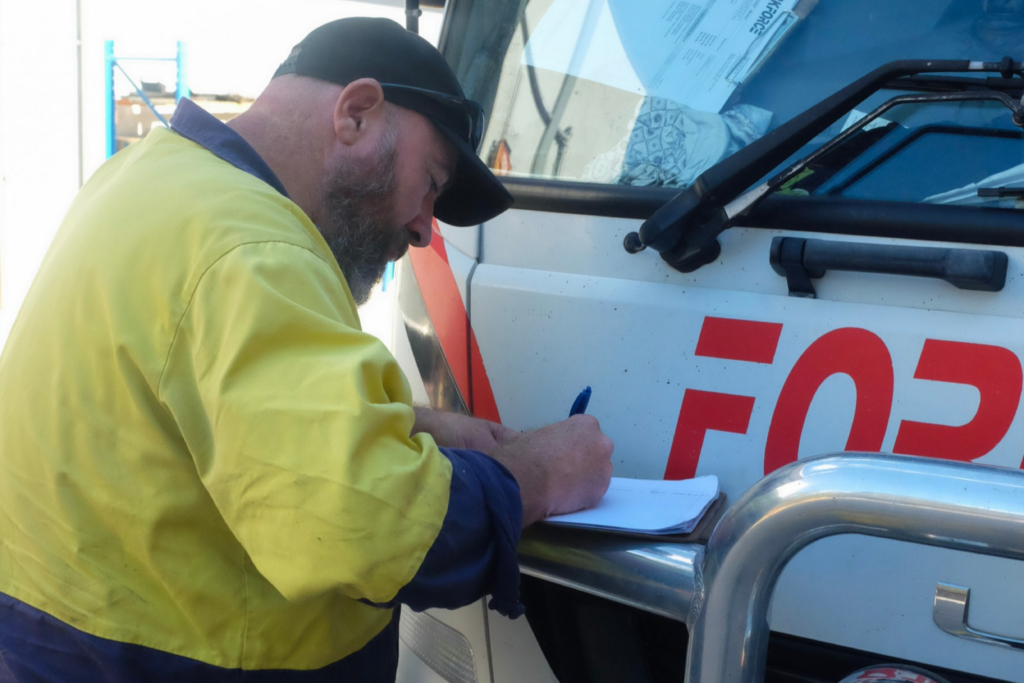
Reviewing your forklift at the start of every shift is important to ensure your forklift is safe to use. A forklift pre-start checklist guides your inspection points for your unit and its fitted equipment. Findings that require technical assessment, including faults referred to Fork Force technicians, must be clearly documented so that unsafe equipment remains out of service until it has been assessed.
While it’s important to get your forklift regularly serviced to ensure your unit is in its best condition, performing pre-start checks ensures you can keep on top of any issues before they turn into expensive problems. Your forklift pre-start checklist covers the equipment’s physical condition and how the controls respond during testing and is important to ensure the safety of your team and workspace. The Fork Force service team provides technical support for any issues that may occur with your unit, and gets your forklift back to operation as soon as possible. You can also purchase Pre-Start Books directly from Fork Force.
Adapting Your Forklift Pre-Start Checklist to the Unit
Your forklift safety checklist needs to cover the equipment and its fitted attachments:
- Record the forklift’s unit number to ensure you are reviewing the correct machine.
- Confirm that the capacity plate covers the current configuration and that any forklift attachments are rated for the lifting capacity.
- Check attachment locking devices for damage that prevents secure engagement.
For more information on how attachments affect lifting capacity and safe operation, read Fork Force’s guide to forklift attachments and safety considerations.
Your daily forklift inspection checklist for use in Australia should state when inspections are required, following the manufacturer’s instructions and guidance from your state or territory regulator. WorkSafe Victoria recommends a forklift pre-start inspection at the start of each shift, before first daily use and when the operator changes.
What to Check Before Operating a Forklift
With the forklift safely parked, tynes lowered and power switched off, work through your forklift daily inspection checklist and record any damage or faults, such as:
- Tyres and wheels: Look for cuts, missing chunks and damaged rims. Check pneumatic tyre pressures against the specified values.
- Forks and retention: Look for cracks or bending, and confirm that positioning locks and retaining devices are secure.
- Mast and hydraulics: Inspect accessible chains and hoses for visible damage. Look beneath the unit for fresh leaks without reaching into the mast.
- Guards and backrest: Look for impact damage and loose mountings that need assessment.
- Operator restraint: Check belt webbing and buckle operation; inspect seat mountings for looseness.
- Identification and capacity: Confirm the forklift’s identification and that its capacity information is legible and relevant to the fitted attachment.
- Fuel and fluids: Complete the manufacturer’s specified level checks and inspect accessible fuel components for leaks.
If you find fork damage, report it for assessment by a qualified technician. Fork Force also supplies forklift parts and accessories for a range of makes and models.
Testing Brakes, Steering and Hydraulic Controls
Your pre-start should do a thorough check of your forklift’s movements before the start of its shift to avoid any potential operational issues and collisions. In a clear area set aside for testing, follow the manufacturer’s procedure for checking service and parking brakes. Test how the forklift stops and whether the parking brake holds under the specified test conditions, and review steering for excessive play or a delay between turning the wheel and the forklift responding.
Follow the manufacturer’s checks for lift and tilt, watching for jerky movement or lowering without a control input. Test the horn and fitted warning devices and check fitted safety functions using the manufacturer’s procedure without bypassing them – recording dashboard warnings. Stop testing if a fault makes operation unsafe; do not pick up a load to investigate suspected brake or hydraulic problems.
Electric Forklift Pre-Start Checks After Charging
After charging, your electric forklift pre-start checks include the charging connection and battery restraints. Disconnect the charger using the manufacturer’s procedure and inspect accessible cables and connectors for damage, ensuring that the battery restraints are secure. Read the charge level and check for any error messages on the display.
For lead-acid batteries, check electrolyte levels only if the manufacturer requires it and you have been trained to do so. For lithium batteries, follow the inspection instructions and do not open a sealed pack or add water.
What Happens When an Inspection Finds an Issue?
Report defects to the person responsible under your site’s procedure. If a defect makes the forklift unsafe, stop using it and follow your workplace’s procedure to prevent another operator from using it.
Record the forklift’s identification and inspection time and describe where the fault occurs and what issue happens. For example, “lift jerks during raising” gives the technician a specific symptom to investigate, while “hydraulics faulty” does not describe the movement.
A qualified technician should assess what needs repairing. After repairs and the required checks, the person authorised under your site’s procedure must approve the forklift’s return to use.
If the same fault reappears on following pre-start inspections, check whether the repair record shows completed work and approval to use the forklift. If either is missing, follow up with the person responsible for maintenance.
Need help with your forklift pre-start checklist or servicing requirements? Contact Fork Force for expert assistance.