
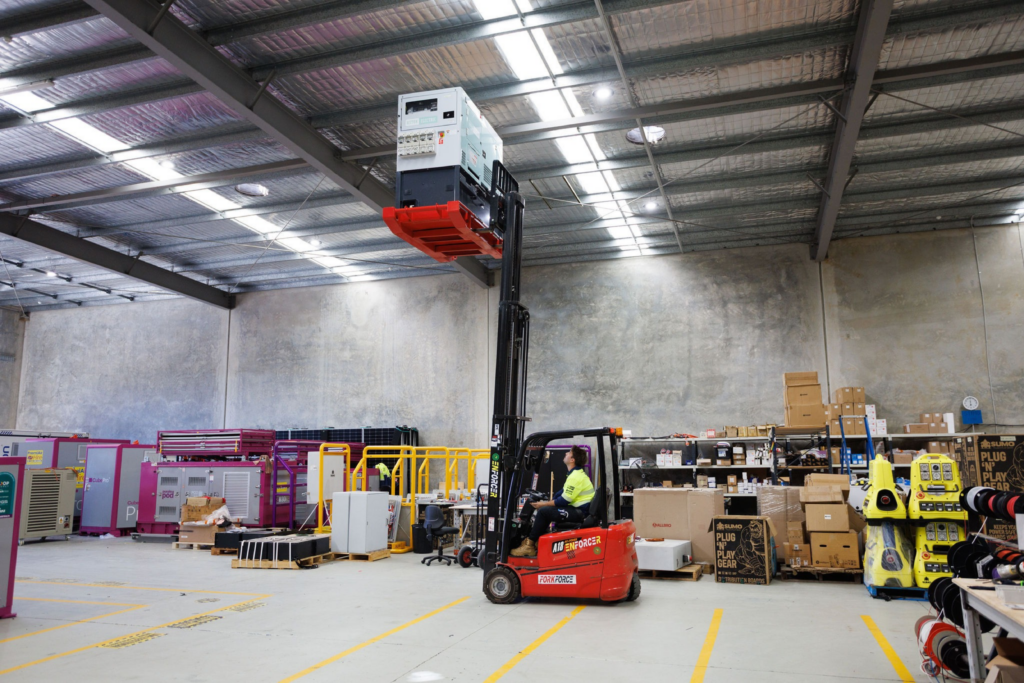
Replacing a forklift or adding capacity requires a machine suited to your loads and working hours. Lead-acid and lithium electric forklifts have different charging routines and battery maintenance requirements for consideration. Your workload and available charging time determine the battery capacity you need, while the lifting specification and charging installation affect which forklift your site can accommodate and the total purchase cost.
Electric forklifts are a great addition to a variety of applications such as logistics, food and beverage, retail, warehousing and more. With lead-acid and lithium options, they are a smarter solution to operations needing reliable lifting with stable recharge costs and clean operation.
Whether you’re looking to invest in a new unit or replacing an existing one, your operations need an electric forklift that can confidently manoeuvre and transport loads across your site. The decision includes its lifting specification, how it receives power and the cost of keeping it available.
Fork Force offers both conventional battery-electric and lithium electric forklifts, each with different charging and maintenance requirements. Understanding that distinction helps you compare electric forklifts by their battery requirements alongside the work each unit must do.
Electric Forklift Suitability for Your Site
Moving between warehouse racking and an outdoor loading area exposes your forklift to different surfaces and weather, and it’s important to ensure that your forklift is suitable for your environment to reduce inefficiencies.
Electric forklifts best suit indoor operations on smooth warehouse floors, and emit zero emissions and low noise pollution. Ensure that your tyre specification and ground clearance is suitable for the work you need. While electric forklifts are best for indoor applications, some models have a weatherproof build and are proficient for outdoor work..
For an electric vs diesel forklift comparison, electric power removes engine exhaust when in use, which is best for operations inside enclosed buildings. Your forklift’s load capacity needs to also consider the rated lifting capacity when working at height. Forklift attachments can also affect a forklift’s rated capacity, so always check that the capacity plate reflects the fitted equipment and intended load.
Lead-Acid vs Lithium Electric Forklifts: What’s the Difference?
Battery electric forklifts are powered by lead-acid batteries, and are the more cost-effective choice. Lead-acid batteries require fluid checks and maintenance according to the manufacturer’s instructions. Their prescribed charging cycle also needs time in your operating schedule, including cooling where specified. Lead-acid batteries also emit fumes when charging, so will need a well-ventilated area to accommodate. Additionally, missed battery care adds maintenance work and risks battery damage.
Lithium electric forklifts have a higher upfront cost, however require less maintenance. These models have faster charging times compared to lead-acid, and do not emit any fumes. Your workplace may need to accommodate the charging arrangements for your electric forklift, however battery swaps can be done to quickly get back to work. Lead-acid batteries also have a shorter lifespan compared to lithium, and will need to be replaced sooner than lithium.
Will the Battery Cover Your Busiest Shift?
A forklift handling occasional deliveries has different battery demands from one travelling continuously with heavy loads throughout an eight-hour shift. Battery selection needs to account for how much work happens during that time.
When looking at an electric forklift for your operations, consider:
- Loaded travel distance and repeated ramp use.
- Frequency of lifting and the working lift height.
- Breaks during which the forklift is available for charging.
- Additional work during peak delivery periods.
Charging may require downtime and operations will need to be planned around it; however, additional batteries can support longer shifts with easy swaps.
Explore Fork Force’s electric forklift range to compare models and lifting specifications.
Charging Space and Electrical Supply
Buying an electric forklift in Australia includes checking that your premises can supply the specified charger. Your supplier should be able to assist in finding a suitable forklift with your current arrangements; however, depending on your needs or model type, may need to have additional electrical work to support the forklift.
Your charging position needs accessible parking space, with cables protected from passing equipment and pedestrian routes. For lead-acid batteries, Safe Work Australia’s industrial lift truck guide calls for ventilation to disperse gases released during charging.
Include charger access in the site layout. A charger across a busy yard takes travel time to reach, and a parked forklift must not obstruct loading access while connected.
How Much Will It Cost to Keep the Forklift Working?
The total electric forklift cost includes the purchase price, electricity, servicing, ongoing battery maintenance and any charging installation fees. Include a battery replacement allowance based on the proposed battery’s duty and warranty conditions.
Electric forklift benefits include removing engine oil changes and associated engine maintenance. The forklift still needs hydraulic and brake servicing, alongside battery care. Fork Force also provides forklift servicing and repairs to support ongoing maintenance. With electric forklifts, you save money in the long run with reduced maintenance costs and energy savings depending on electricity tariffs and actual consumption for your workload.
Find an electric forklift that works as hard as you do. Contact Fork Force to explore options suited to your site, workload and budget.