
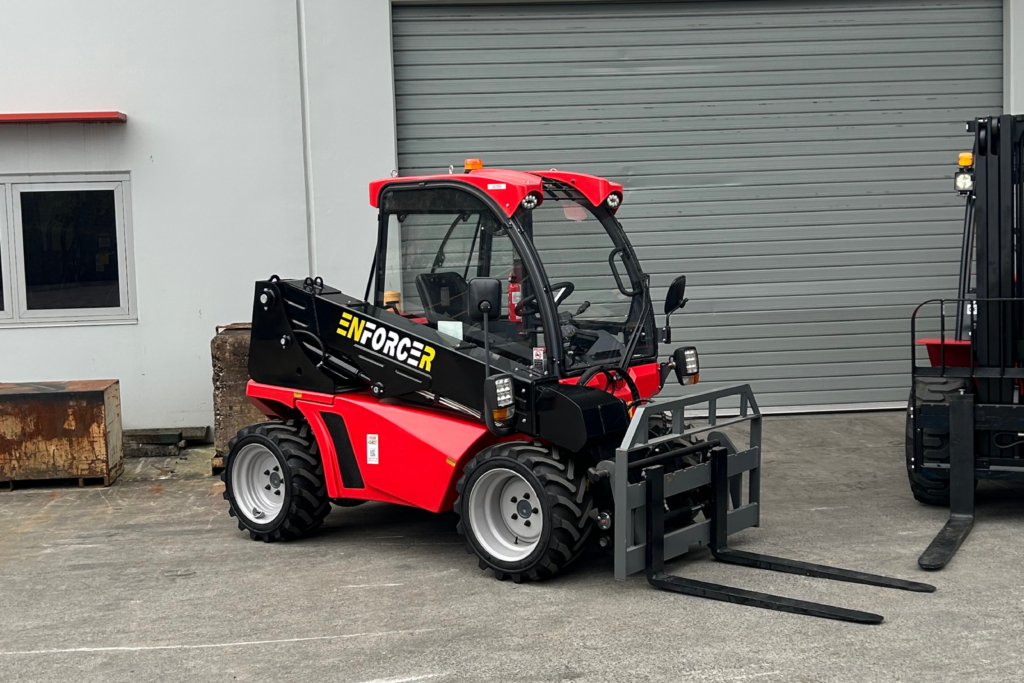
If you’re navigating rough terrain and lifting over obstacles consistently, a telehandler might be the smarter solution. Choosing the right model can be determined by assessing the loads, weight, lift height and where the final position of the loads will go. Site conditions place further limits on the machine and configuration suitable for that lift. Your search with Fork Force therefore starts with the load, working position and conditions on your site.
Telehandlers are a versatile piece of equipment for outdoor operations across rugged terrain and challenging worksites. However to ensure that the unit is best suited to your operations and does not compromise safety, there are specification and environmental considerations you need to make. A 2-tonne load sitting beside a building does not tell you which telehandler can place it on an upper level. The machine must carry that weight to the required position while remaining within its approved operating capacity. If you are establishing what a telehandler is used for, its defining capability is positioning loads outward as well as upward through an extending boom. When you compare telehandlers with Fork Force, start with the lift the machine has to complete on your site.
Telehandler Lift Capacity and Load Charts
A telehandler uses a telescopic boom to position a load at different heights and distances from the machine. This extending boom combined with the lift of a forklift is central to what a telehandler is. The load chart shows the permitted capacity for different combinations of forward reach and lift height, however the specific use should be assessed to ensure it is within the maximum rated capacity
Understanding what size telehandler you need depends on the loads you are lifting and the final placement. If your load weighs 2 tonnes, the relevant telehandler lift capacity will indicate the height and reach the machine is capable of lifting to.This is also the basis for establishing what size telehandler you need. Stabilisers are also a unique feature on telehandlers to provide extra support for extended loads. SafeWork NSW advises operators to follow the operating instructions, use the appropriate attachment and account for ground slope and support where required.
Site Conditions and 4WD Telehandlers
Construction sites, agriculture and other outdoor workplaces add physical requirements that affect machine selection. When looking for a telehandler in Australia for rough terrain, the ground surface, gradients and available operating area need to suit the machine. A 4WD telehandler is ideal for rugged conditions and delivers better performance in outdoor operations. For the intended travel and lifting area, establish:
- Ground surface and bearing conditions.
- Slopes and changes in site level.
- Working and turning space around the load.
- Access width and overhead restrictions.
- Travel distance between pickup and placement points.
These guides can also help understand whether you need a telehandler vs forklift. A conventional forklift lifts through a mast and suits loads that can be approached and placed directly infront. A telehandler forklift, also known as a telescopic handler, has an extending boom that provides forward reach where the load has to pass over, into or across an area the machine itself cannot occupy.
Telehandler Attachments and Working Capacity
Adding an attachment to your telehandler affects the capability of the unit – allowing the forklift to perform different tasks. Forks carry palletised materials differently from a bucket handling loose material, while a jib creates a suspended-load application.
Telehandler attachment compatibility, weight and the resulting load position need to be accounted for in the approved operating configuration. SafeWork NSW specifically warns that freely suspended loads affect telehandler stability and that the correct attachment must be used for the task. We recommend sourcing your attachment through a reliable forklift and telehandler attachment supplier like Fork Force to ensure your attachment is compliant and safe.
If you’re looking to utilise your telehandler for a variety of lifting jobs, check each required attachment and its rated load capacity before comparing telehandlers.
Telehandler Price and Ownership Requirements
How much a telehandler costs depends on the specification and capacity required to perform the work. Due to the specialisation and capability, a telehandler price can be on the higher end of lifting equipment, but is a reliable investment. . Paying less for insufficient reach or usable capacity may cause problems in long run, such as broken down equipment, increased servicing expenses or needing to invest in additional equipment. Alternatively, excess capacity or reach means paying for capability that may remain unused.
Once suitable machines have been identified, the commercial comparison can include new or used condition, servicing requirements, attachment costs and expected utilisation. Purchase and hire suit different usage patterns, so a machine required continuously creates a different ownership calculation from one needed for a temporary project.
Our Enforcer telehandler range is available through purchase and flexible ownership options, with servicing and parts support available through our nationwide network. Your ownership choice can then reflect how long and how intensively you expect to use a machine already specified for the required lift.
Discuss your telehandler requirements with Fork Force for the required lift.